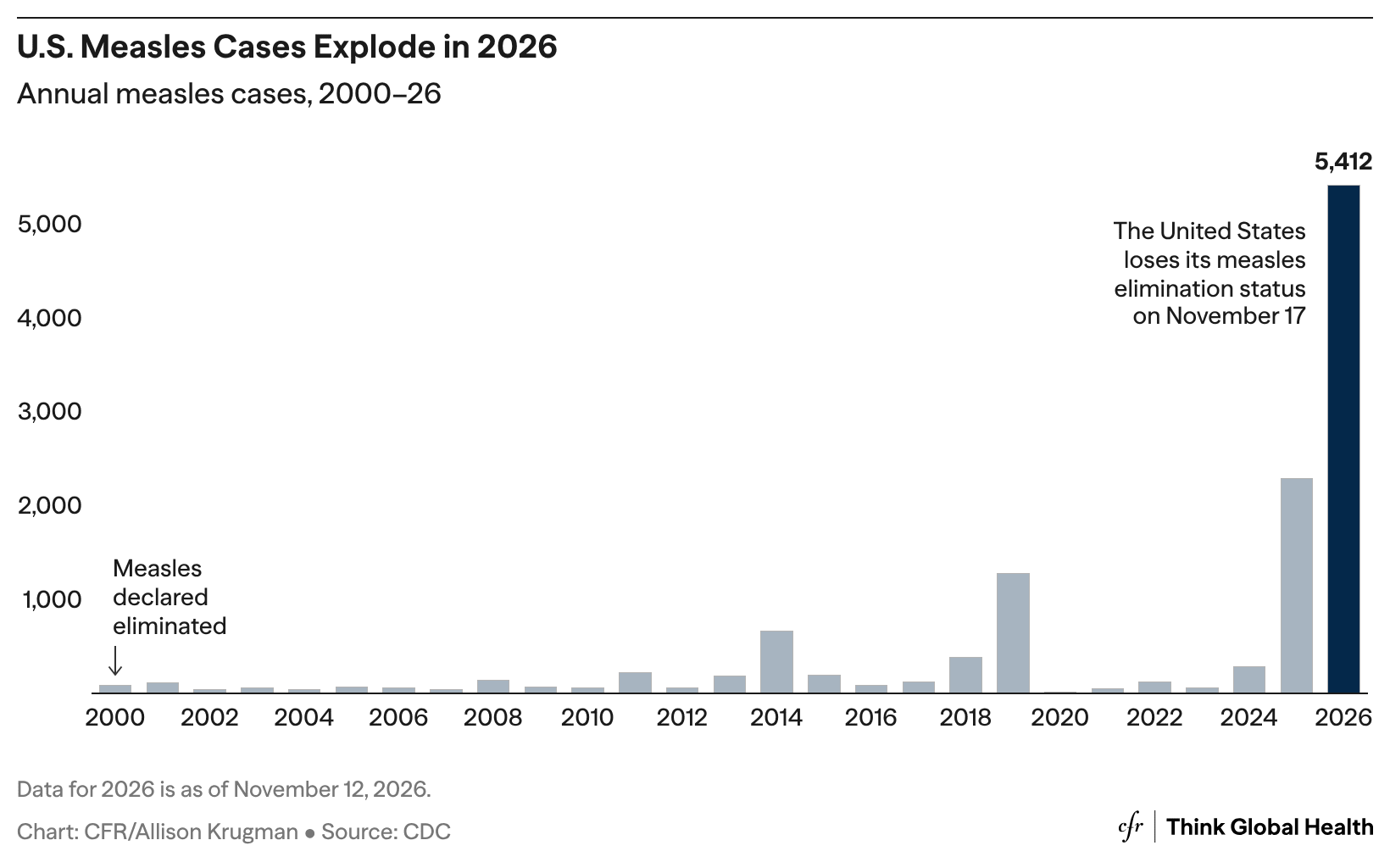
This week, the Pan American Health Organization announced that the United States, Bolivia, and Mexico had lost their measles elimination status, following continuous transmission for more than twelve months.
Think Global Health's deputy managing editor, Allison Krugman, explains the sharp rise in measles in the United States in five charts. Against a backdrop of rising vaccine hesitancy and misinformation during the COVID-19 pandemic and the appointment of Robert F. Kennedy Jr. as the U.S. secretary of health and human services, Krugman visualizes telling data on declining vaccination among kindergartners and rising vaccine exemptions.
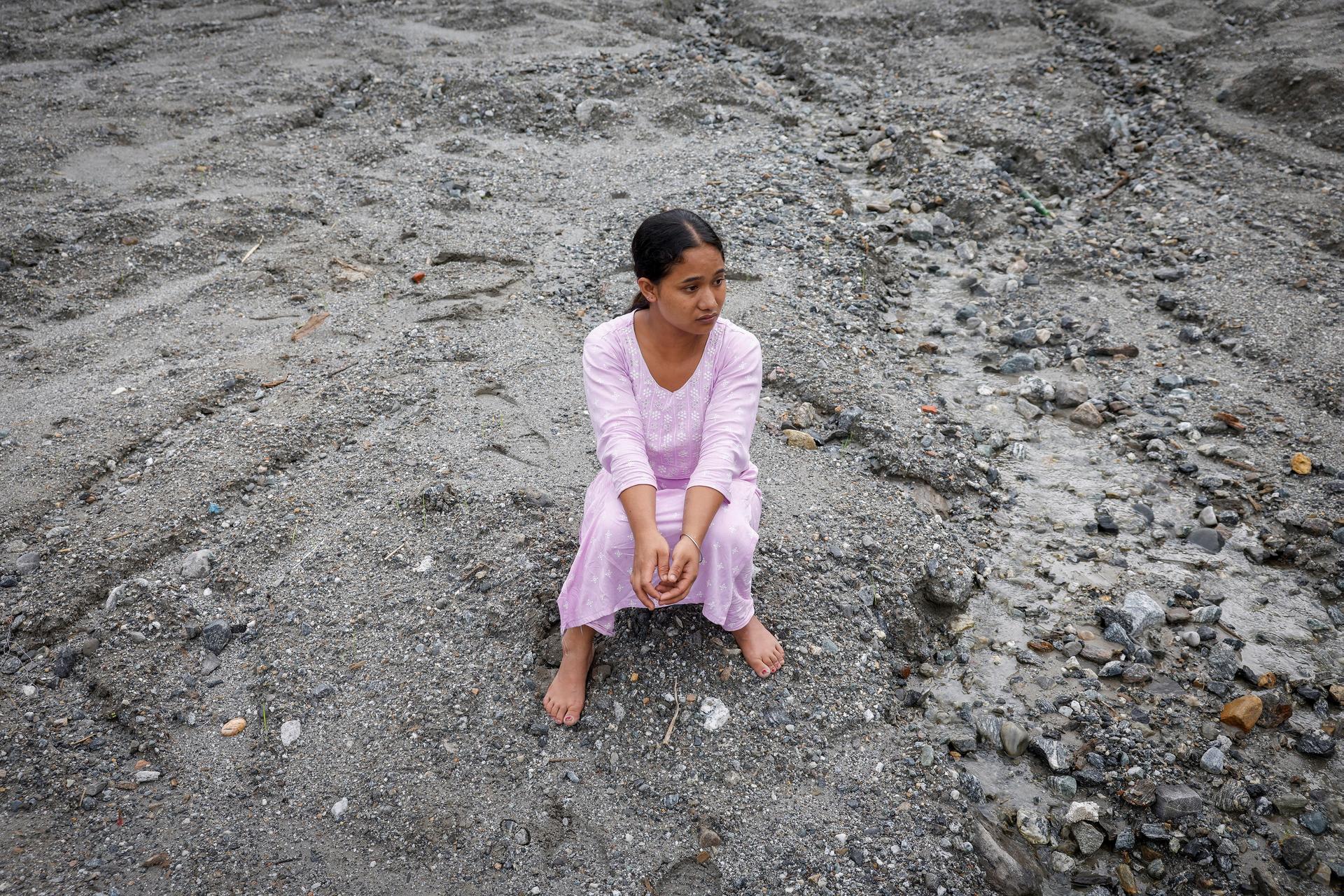
As the second week of the thirty-first UN Climate Change Conference concludes, the next piece focuses on an underappreciated mental consequence of climate-related disasters: numbness—or collective disassociation—in the face of destructive events that people feel powerless to stop. One way to counteract numbness, however, writes Meghana Nallajerla, a PhD candidate in social work at the University of Southern California, is acting together to fight climate change. Research shows that doing so can remedy desensitization.
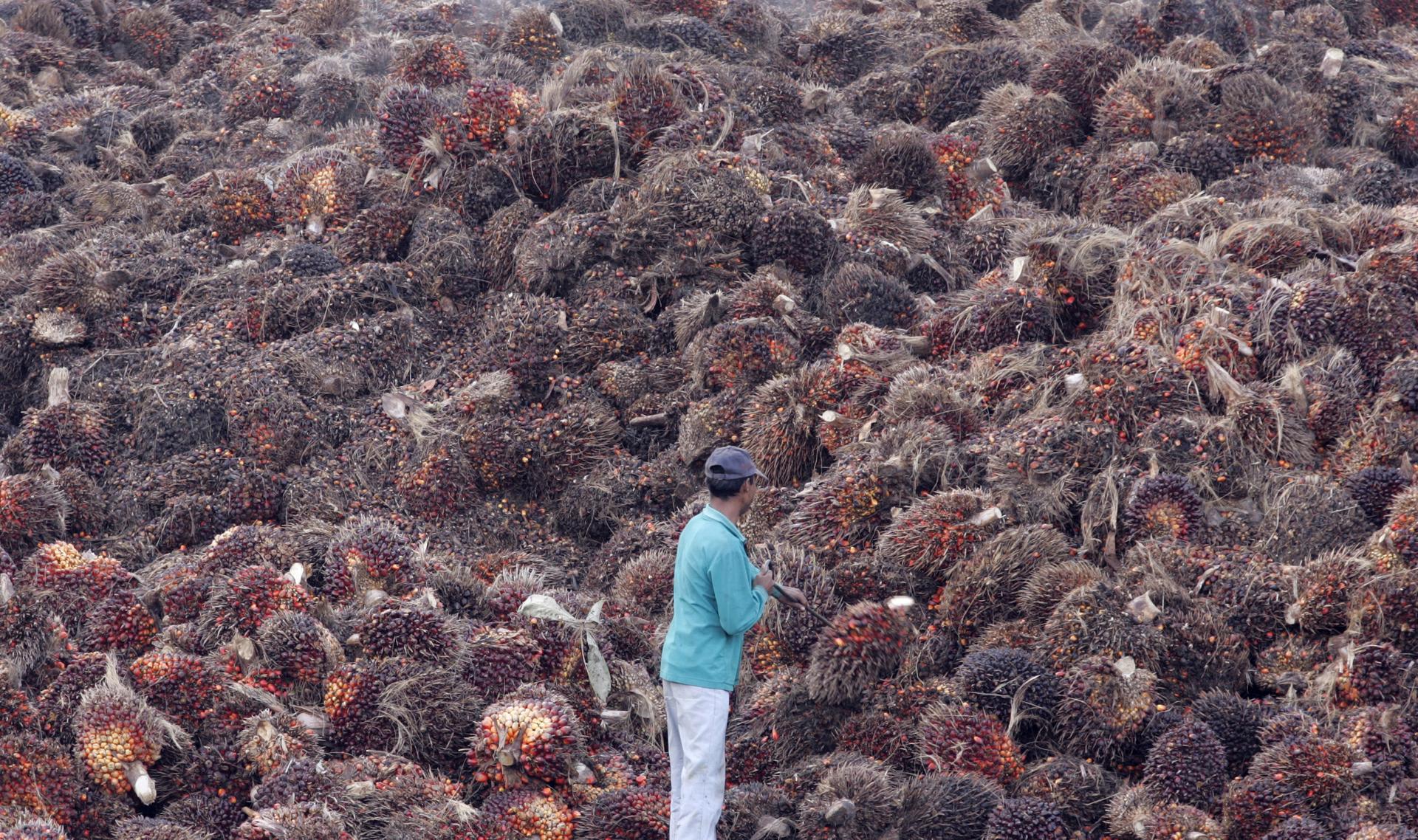
The last article, written by Ashley Aimone, a researcher at the University of Toronto's Dalla Lana School of Public Health, focuses on Malaysia's role in planetary warming, specifically its companies' investments in palm oil farming in Indonesia, which contribute to widespread deforestation. Aimone notes how burning peatlands in Indonesia to clear them for palm oil production damages Malaysians' health when the polluted air crosses borders.
Finally, Think Global Health welcomes our new managing editor, Brian W. Simpson. He began his tenure with Think Global Health this week. You will no doubt be hearing from him in future newsletters.
Until next week!—Allison Krugman, Deputy Managing Editor; Katherine Leach-Kemon, Senior Contributing Editor; and Alejandra Martinez, Research Associate
Malaysia's Planetary Health Action Plan is an important step forward on climate, but its success is at risk if Malaysian companies continue contributing to pollution in other countries
As climate disasters intensify and become more frequent, communities can experience "collective dissociation," a mass desensitization to repeated crises