• Environment
  • Poverty
  • Trade
  • Governance
  • Food
  • Urbanization
  • Aging
  • Gender
  • Migration
  • Data Visualization
  • Recommendations
  • Research & Analysis
  • Series
  • Interviews
  • About This Site
  • Submission Guidelines

Newsletter

Think Global Health

  • Environment
  • Poverty
  • Trade
  • Governance
  • Food
  • Urbanization
  • Aging
  • Gender
  • Migration
  • Data Visualization
  • Recommendations
  • Research & Analysis
  • Series
  • Interviews
  • About This Site
  • Submission Guidelines

Newsletter

Think Global Health

Russian Strikes, Cyclosporiasis Deaths, and Measles in Bangladesh

August 7, 2026


Editor's Note

On Wednesday, a Russian missile attack on Kyiv, Ukraine, killed 17 people and injured dozens more. The strike, which was Russia's third major aggression on the city in a week, came after Ukraine reported a record-setting number of Russian missile strikes in July.  

As the Russia-Ukraine war intensifies, medical professionals in Lithuania are preparing for what they refer to as Day X, a potential military invasion by Russia. To lead this week's edition, journalist Bella May and filmmaker Samuel Wands visit Vilnius, Lithuania, where the Ministry of Health is sending the country's doctors and nurses to Ukraine to learn how to treat traumatic injuries caused by war. 

The U.S. cyclosporiasis outbreak reached a grim milestone on Tuesday, when two people in Michigan were the first to die from complications caused by the parasite. That outbreak is one of several recent foodborne illness episodes in the United States, raising the question of whether those events are becoming more common. To provide insight, journalist Sam Nichols interviews Lee-Ann Jaykus, a researcher in food microbiology and safety at North Carolina State University, who highlights funding cuts and climate change as potential drivers behind the rise of foodborne illness.  

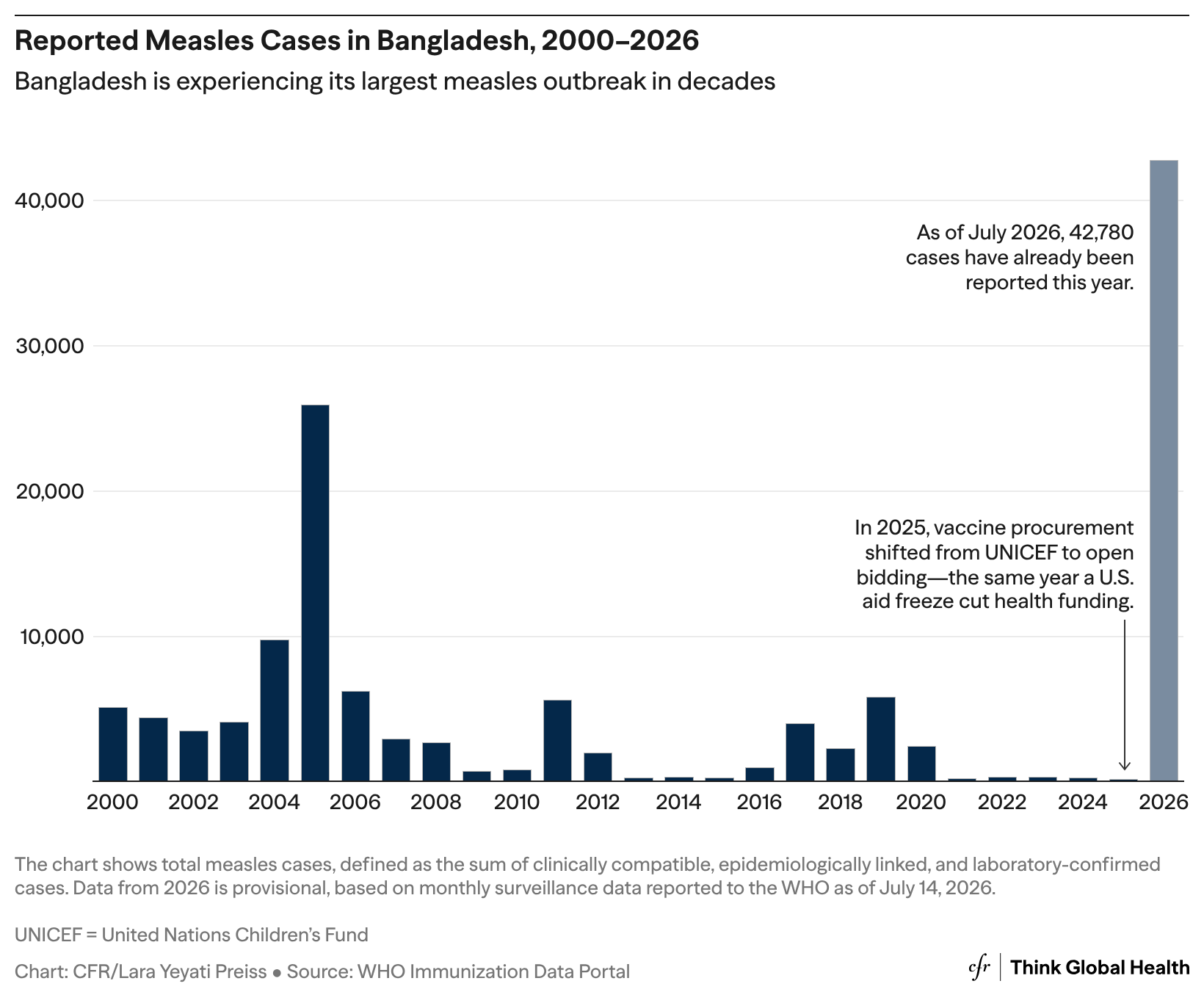
Meanwhile, Bangladesh is facing the world's largest measles outbreak in terms of case count. To wrap up, journalist Zakir Hossain Chowdhury describes how politics, policy gaps, and supply-chain failures depleted Bangladesh's vaccine stocks and created the conditions for measles, and other infectious diseases, to flourish. 

Until next week!—Caroline Kantis, Associate Editor 


This Week's Highlights

GOVERNANCE

NGO Blue/Yellow co-founder Jonas Ohman puts an inert, drone-carried explosive on a drone at the NGO headquarters in Vilnius, Lithuania, in March 2026.

As the Ukraine War Intensifies, Lithuania Prepares Its Health System

by Bella May and Samuel Wands

After a record-breaking month for missile strikes in Ukraine, Lithuanian medical professionals are learning the basics of war medicine to prepare for a possible attack  

Read this story


Figure of the Week

A column chart showing measles cases in Bangladesh from 2000-2026

Read this story


Recommended Feature

GOVERNANCE

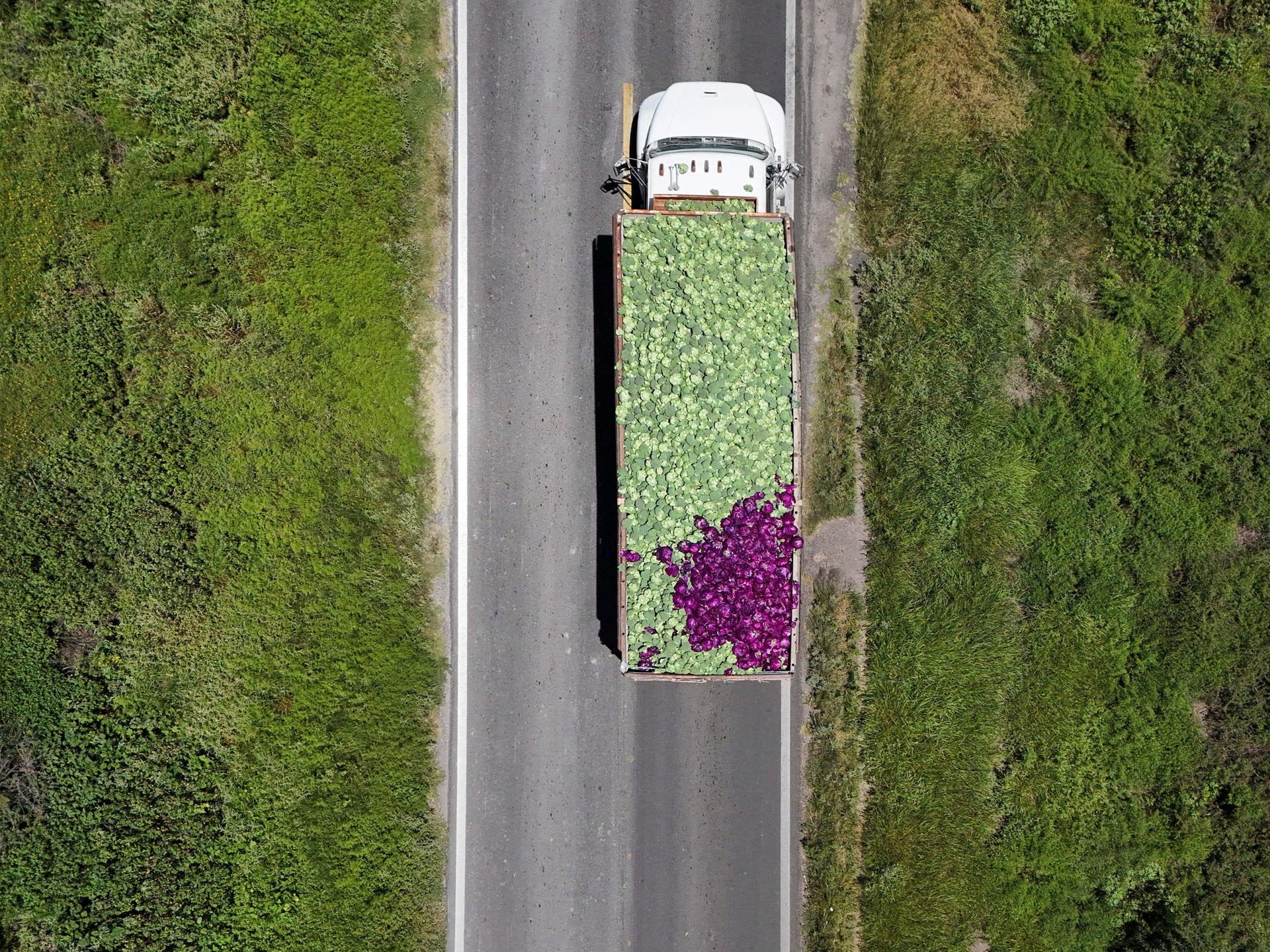
A drone view shows a truck transporting fresh produce after leaving the installations of U.S. supplier Taylor Farms, following the temporary closure announced by Taylor Farms, in Doctor Mora, Guanajuato state, Mexico, on July 24, 2026.

Cyclospora Outbreak: Is Foodborne Illness Becoming More Common in the United States?

by Sam Nichols

According to food microbiologist Lee-Ann Jaykus, climate change and funding cuts could lead to greater risk of foodborne disease

Read this story


What We're Reading

China's Nonsmokers Try to Clear the Air, One Confrontation at a Time (New York Times)

Moderna Begins First Human Trial of Bundibugyo Ebola Vaccine (Reuters)

Russian Strike Destroyed Millions of HIV Prevention Supplies in Ukraine (New York Times)

EXCLUSIVE: Congo's Ebola Epidemic Started at Least 4 Months Before It Was Detected (Science)

Invasive Mosquito Sparks Malaria Fears Across Africa (Africanews)


Interested in submitting?

Review our Submission Guidelines

Previous NewsletterBack to ArchiveNext Newsletter

Subscribe to Our Newsletter

Sign up for our weekly newsletter to stay up to date.

See Past Newsletters
About This SiteSubmission Guidelines

©2025 Council on Foreign Relations. All rights reserved. Privacy Policy and Terms of Use.