• Environment
  • Poverty
  • Trade
  • Governance
  • Food
  • Urbanization
  • Aging
  • Gender
  • Migration
  • Data Visualization
  • Recommendations
  • Research & Analysis
  • Series
  • Interviews
  • About This Site
  • Submission Guidelines

Newsletter

Think Global Health

  • Environment
  • Poverty
  • Trade
  • Governance
  • Food
  • Urbanization
  • Aging
  • Gender
  • Migration
  • Data Visualization
  • Recommendations
  • Research & Analysis
  • Series
  • Interviews
  • About This Site
  • Submission Guidelines

Newsletter

Think Global Health

U.S. Egg Prices Hit 45-Year High and the USAID Waiver Falls Short

February 14, 2025


Editors' Note

Last month, shortly after President Donald Trump announced an executive order on reevaluating U.S. foreign aid, Secretary of State Marco Rubio approved a waiver for existing lifesaving humanitarian assistance programs to continue or resume work. Though the waiver appeared to be a step toward restoring health services, CFR Senior Fellow Prashant Yadav warns it will not achieve its objective of delivering medicines without sufficient staffing at the U.S. Agency for International Development (USAID) and clear, legal definitions of which services are lifesaving.  

Associate Editor Allison Krugman then uses data visualizations to illustrate how Trump's decision to gut the USAID and withdraw the United States from the World Health Organization (WHO) is jeopardizing global health. Krugman notes that the lack of U.S. support and resources could inspire other countries to follow suit and will "hobble critical disease detection, monitoring, and response programs globally." 

This week, U.S. egg prices reached their highest mark in 45 years. Managing Editor Nsikan Akpan speaks with poultry veterinarians and an economist about how a new version of H5N1 avian influenza drove the trend, leading to the culling of 41 million chickens in December and January. They also explain why officials have not deployed vaccines to stem the outbreak.   

Moving to Democratic Republic of Congo, health policy analyst Jonta Kamara and nurse clinician Stephanie Bumba dive into the environmental health risks of the country's $24 trillion mining industry. Workers earn less than $8.60 per day and face unsafe working conditions that harm not only their health but that of their babies.  

To wrap up the issue, Harvard University student Nora Y. Sun explores how the recent U.S. TikTok ban threatens mental health support for the thousands online who use the platform to commune with others living with stigmatized mental health disorders.  

Until next week!—Nsikan Akpan, Managing Editor, and Caroline Kantis, Associate Editor 


This Week's Highlights

TRADE

Image

The USAID "Lifesaving" Waiver Is a Mirage Without Sufficient Staffing 

by Prashant Yadav

The State Department's humanitarian waiver is essential but falls woefully short of ensuring patients receive medicines 

Read this story


Figures of the Week

Trump's executive orders to gut global aid and withdraw from the WHO leave a major global health funding gap. In recent years, the United States has funded approximately one-third of all global health programs.
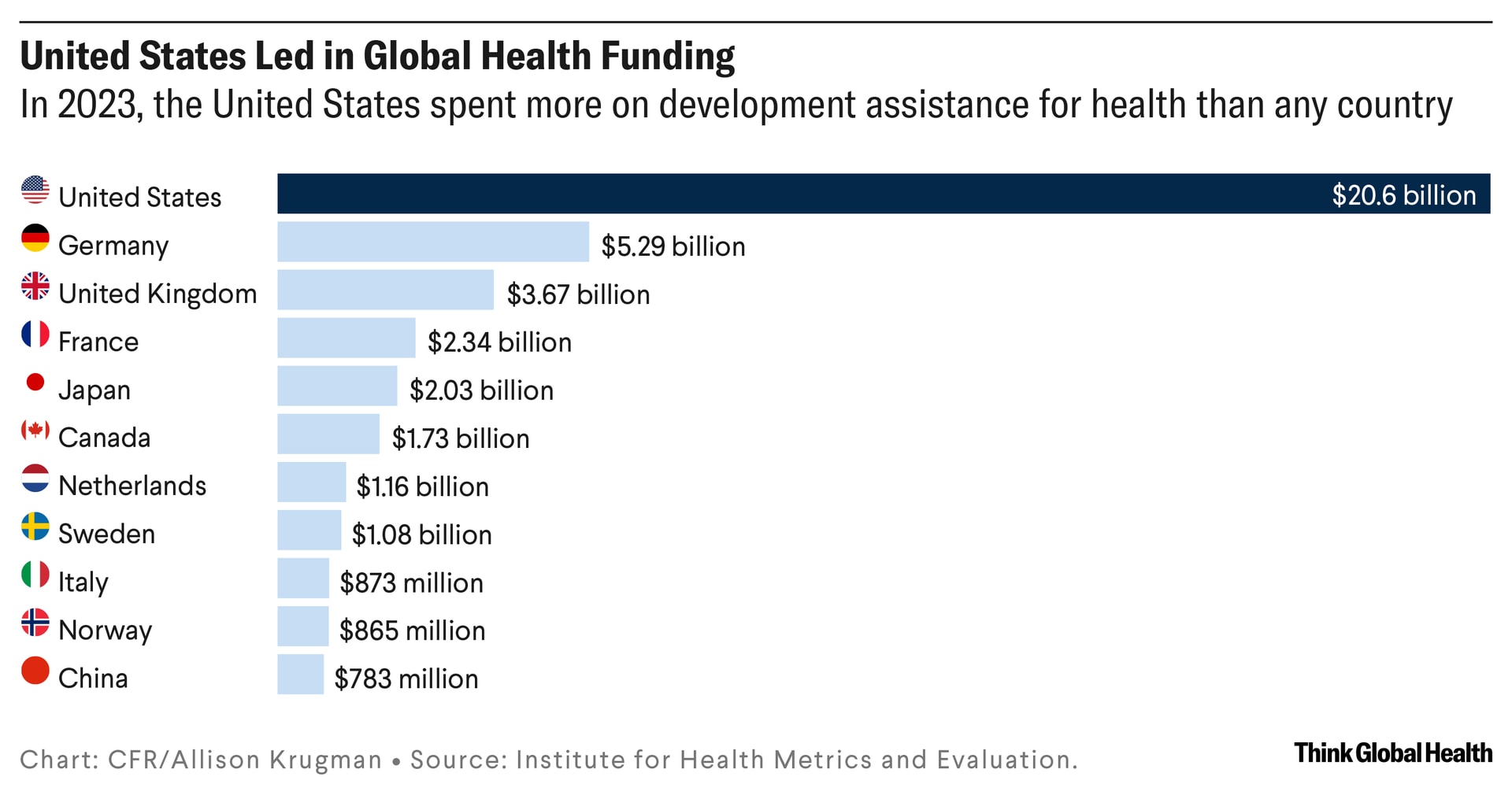
A bar chart showing global health funding by country
 

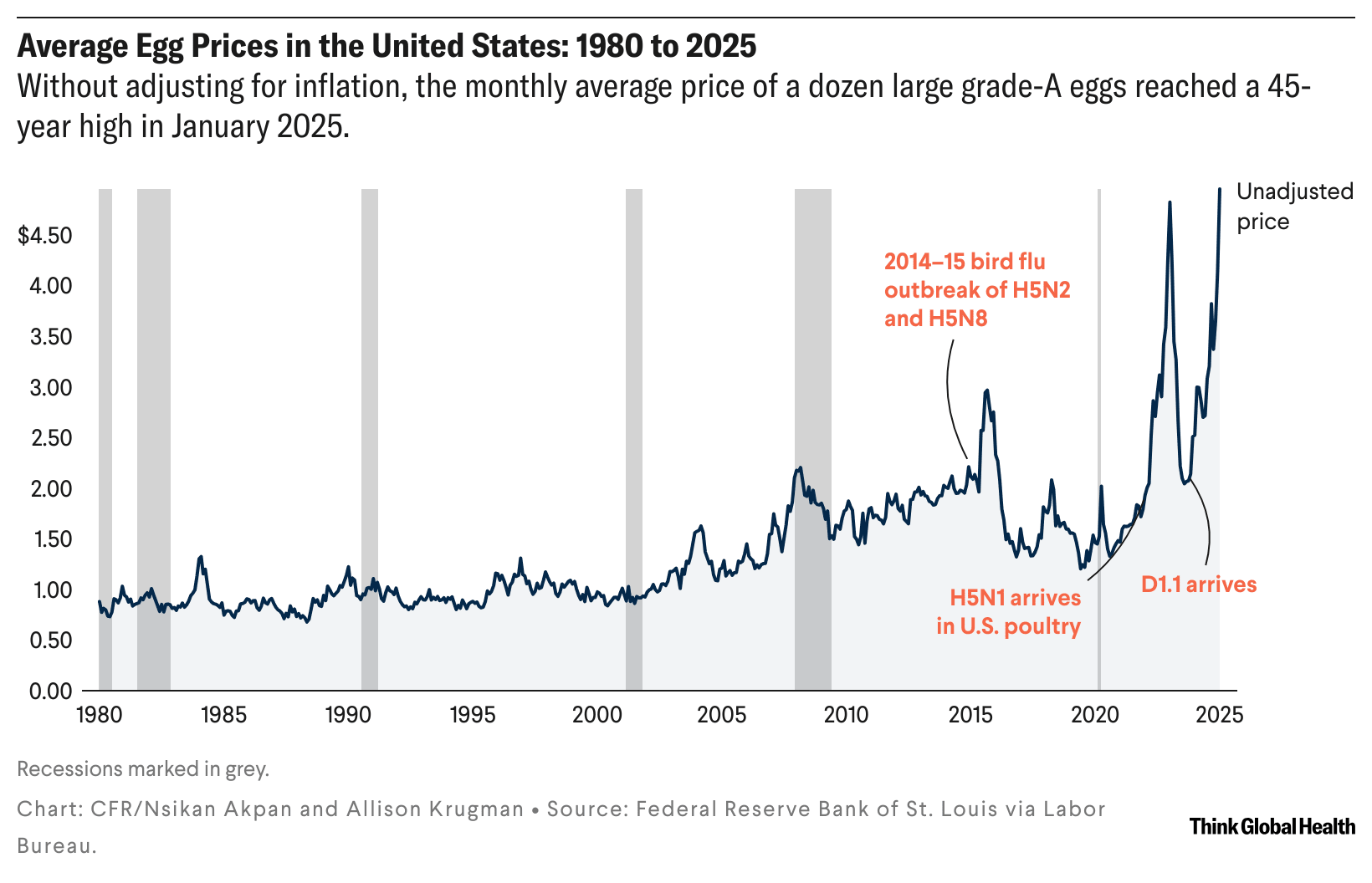
Egg prices reached a 45-year high on February 12, after a new strain of H5N1 avian influenza led to the culling of millions of backyard and commercial chickens and restricted the egg supply.

A line graph showing average egg prices in the United States from 1980-2025
 

Recommended Features

TRADE

Image

Protecting Miners' Health in Democratic Republic of Congo 

by Jonta Kamara and Stephanie Bumba

Growing evidence reveals mining harms pregnancies, and basic medicine near the sites is often inaccessible 

Read this story

GOVERNANCE

Image

Inside TikTok's Mental Health Communities 

by Nora Y. Sun 

Social media can offer much-needed mental health support, but it still poses various risks to users 

Read this story


What We're Reading

It's Like "Dead Birds Flying": How Bird Flu is Spreading in the Wild (NPR's Goats and Soda)

Dismay as United Kingdom Poised to Cut Funding for Global Vaccination Group Gavi (The Guardian)

Indonesia's Prabowo Launches Another "Quick-Win Priority"—Free Health Checks (South China Morning Post)

Which Countries Are Most Exposed to U.S. Aid Cuts; And What Other Providers Can Do (Center for Global Development)

Weight-Loss Jabs May Help Reduce Alcohol Intake, Study Finds (The Guardian)


Interested in submitting?

Review our Submission Guidelines

Previous NewsletterBack to ArchiveNext Newsletter

Subscribe to Our Newsletter

Sign up for our weekly newsletter to stay up to stay up to date.

See Past Newsletters
About This SiteSubmission Guidelines

©2025 Council on Foreign Relations. All rights reserved. Privacy Policy and Terms of Use.